

|
||||
November 2005 |
|
In the Shadow of "Heroes"
|
|
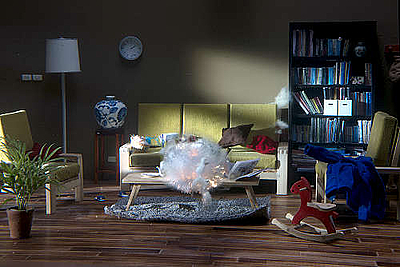
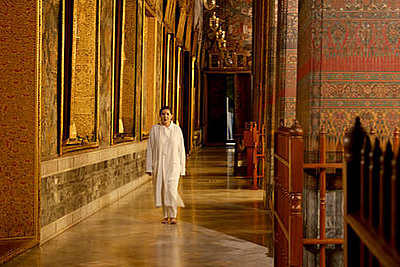
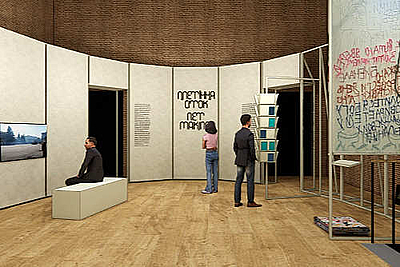
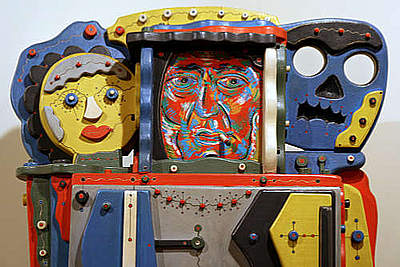
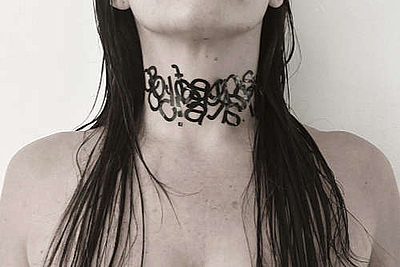
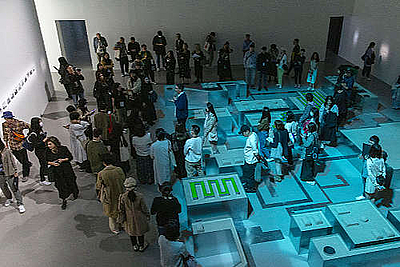
For the first time the Bishkek International Exhibition of Contemporary Art is held under the tribune of the "Alato" Central Square. The underground rooms, with the total area of 1000 square meters, have been in desolation for the last 15 years, having become a shelter for homeless. These are the rooms, from which the representatives of the Communist nomenclature used to come up to review the troops and to which they would return after the celebration. One more feature of this place is the topographical concurrence with the destroyed casemates of the former KGB building. Behind the tribune until the year 2003 stood the statue of Lenin, and now at the same pedestal towers the statue of "Freedom". Concept: The official post-Soviet images of the heroic are already very well represented on Central Asian territory. The present-day creation of heroic myths has resulted in the cloning of numerous portrait statues on horseback all the way from the Caspian Sea to Mongolia. The search for cultural identity is in crisis. Somewhere within us, we experience an unwavering sense that what is most important has been left behind, beyond the limits of public attention, in the shadow of "heroes." One of the eternal problems for creative people is the understanding the "heroes" of their time. Artists’ identities are indissolubly connected to their surrounding environments, and their creative works, in one way or another, reflect the processes occurring in society at any given moment. Contemporary Central Asia is characterized, on the one hand, by collective phobias, skepticism, disappointment, and a lack of faith in tomorrow and, on the other, by adventurism, cynicism, and a desire for pleasure and success. The overwhelming prevalence of these moods and behaviors leads us to ask the question: How can we define the "hero" of our time? What is he like? In what contexts is he represented? Is there an inherent conflict in asking what makes for a "hero" in today’s world, when "anything goes" in the arts? Can we speak with certainty of the loss of "the enemy" in artistic representations? How should artists relate to mass media treatments of "heroes"? Artists: Ernest Abdrazakov (Kyrgyzstan) Lida Abdul (Afghanistan/USA) Ruben Arevshatyan (Armenia) Said Atabekov (Kazakhstan) Vyacheslav Akhunov (Uzbekistan) Olga Chernysheva (Russia) Yelena Vorobiova (Kazakhstan) Victor Vorobiov (Kazakhstan) Gamal Bokonbaev (Kyrgyzstan) Iliko Zautashvili (Georgia) Mariam Ghani (Afghanistan/USA) Alia Girik (Kazakhstan) Dmitri Gutov (Russia) Ulan Djaparov (Kyrgyzstan) Muratbek Djumaliev (Kyrgyzstan) Natalia Dyu (Kazakhstan) Alimjan Jorobaev (Kyrgyzstan) Saltanat Kaybyldaeva (Kyrgyzstan) Elena Kambina (Uzbekistan) Gulnara Kasmalieva (Kyrgyzstan) Roman Maskalev (Kyrgyzstan) Erbossyn Meldibekov (Kazakhstan) Alexander Nikolaev (Uzbekistan) Koka Ramishvili (Georgia) Valeri Ruppel (Kyrgyzstan) Adis Seytaliev (Kyrgyzstan) Alexander Ugay (Kazakhstan) Cao Fei (China) Alexander Fyedorov (Kyrgyzstan) Oksana Shatalova (Kazakhstan) Sub-project "In the Shadow of Fallen Heroes" Curator: Sara Raza (Great Britain) Artists from Iranian or Kurdish heritage: Rey Akdogan (Germany) Shahram Entekhabi (Germany) Nooshin Farhid (Great Britain) Shahram Karimi (Germany) Maria Kheirkhah (Great Britain) Mitra Memarzia (Great Britain) Mitra Tabrizian (Great Britain) Safi Yazdanian (Iran) Participants of the panel discussions: Alena Boika, Umelec magazine, Prague Aron Brudny, American University of Central Asia, Bishkek Valeria Ibraeva, SCCA-Almaty Viktor Misiano, editor of the Moscow Art Magazine Sara Raza, art critic, Great Britain Georg Schöllhammer, Documenta 12 Magazine, editor of Springerin magazine, Vienna
|
>> Images
In the Shadow of "Heroes" ArtEast
Prospect Mira, 32-3
Curators:
Zone of Risk - Transition
Kyrgyzstan: Artists |
UiU - home | email | editorial, masthead | newsletter | search |